
For more than seven decades after World War II, the United States occupied a position of unrivaled global influence—not merely because of its military might or economic scale, but because it stood at the center of an extraordinary web of alliances, partnerships, and institutions. From NATO and the transatlantic alliance to intelligence-sharing networks and trade regimes, America’s power rested as much on trust and shared values as on tanks, aircraft carriers, or GDP.
That architecture, former officials and allied leaders now warn, is fracturing at a historic pace.
In a striking phrase that has begun circulating among diplomats and national security veterans, the United States is committing what one former senior official called “superpower suicide”—the deliberate dismantling of the very system that made American leadership possible.
The Power of Alliances—and Their Undoing
Until recently, the United States enjoyed a strategic advantage unmatched by any rival. China’s economic rise and Russia’s military aggression never translated into comparable influence in Europe or Asia because neither country could replicate Washington’s dense network of allies. From Tokyo to Berlin, Ottawa to Copenhagen, America’s partners did not simply cooperate out of fear or convenience; they trusted U.S. leadership.
That trust, analysts argue, has been steadily eroded.
Donald Trump’s approach to foreign policy—transactional, confrontational, and often openly contemptuous of allies—has undermined the shared assumptions that once held alliances together. Tariffs imposed on close trading partners, threats directed at NATO allies, and casual talk of territorial acquisition have shaken confidence in Washington’s reliability.
What once bound the alliance system together—mutual respect, predictable leadership, and a belief in common rules—has been replaced by uncertainty.
Mark Carney and the End of the “Rules-Based Order”
The shift was laid bare at the World Economic Forum in Davos, where Canadian Prime Minister Mark Carney delivered what many observers described as one of the most consequential speeches by a Western leader in years.
Carney did not merely criticize American policy. He challenged the very language that had defined global politics for decades.
“Stop using the phrase ‘rules-based international order,’” he said, arguing that it had always rested on an unspoken contradiction: superpowers enforced the rules but were rarely bound by them. That system, Carney argued, survived because U.S. power, credibility, and values kept it intact. Now, with Washington abandoning its role as steward, the structure itself is collapsing.
The implication was unmistakable. The postwar order is no longer something allies can depend on.
In response, countries are recalibrating. Canada’s recent bilateral trade agreement with China on electric vehicles—once unthinkable given Ottawa’s traditional alignment with Washington—signals a broader trend. Nations are hedging, diversifying, and forging new partnerships to reduce dependence on an increasingly unpredictable United States.
Tariffs, Trade, and the Cost to Americans
The consequences are not abstract. Trade tensions initiated by Washington have rebounded domestically, with economists noting that tariffs imposed on allies overwhelmingly fall on American consumers. Studies cited by major financial outlets suggest that more than 90 percent of tariff costs are absorbed within the U.S. economy, driving inflation and weakening competitiveness.
Meanwhile, Europe—America’s largest trading partner, with roughly $1 trillion in annual trade—has begun exploring greater strategic autonomy. European leaders increasingly speak of “de-risking” their relationship with Washington, not out of hostility, but necessity.
The leverage that once flowed naturally from alliance leadership is slipping away.
Intelligence, Trust, and the Invisible Damage
Perhaps the most profound effects are occurring far from public view.
For decades, U.S. intelligence dominance relied on intimate cooperation with allied services. From counterterrorism operations to cyber defense and Russian threat assessments, trust among intelligence agencies saved lives and prevented crises.
Former intelligence officials now warn that this trust is fraying.
Allies are increasingly cautious about sharing sensitive information, concerned about political volatility, leaks, or policy reversals in Washington. The damage, experts note, will outlast any single administration. Trust, once broken, is difficult to restore.
NATO—the most successful military alliance in history—is not merely a collection of defense commitments. It is a daily, operational partnership built on confidence that each member takes collective security seriously. When that assumption erodes, so does deterrence.
Davos and the New Global Perception
The contrast at Davos could not have been starker.
Past American presidents—Democrats and Republicans alike—used the forum to articulate a vision of shared prosperity, democratic resilience, and cooperative leadership. Their rhetoric emphasized continuity, stability, and responsibility.
Trump’s appearance broke sharply from that tradition.
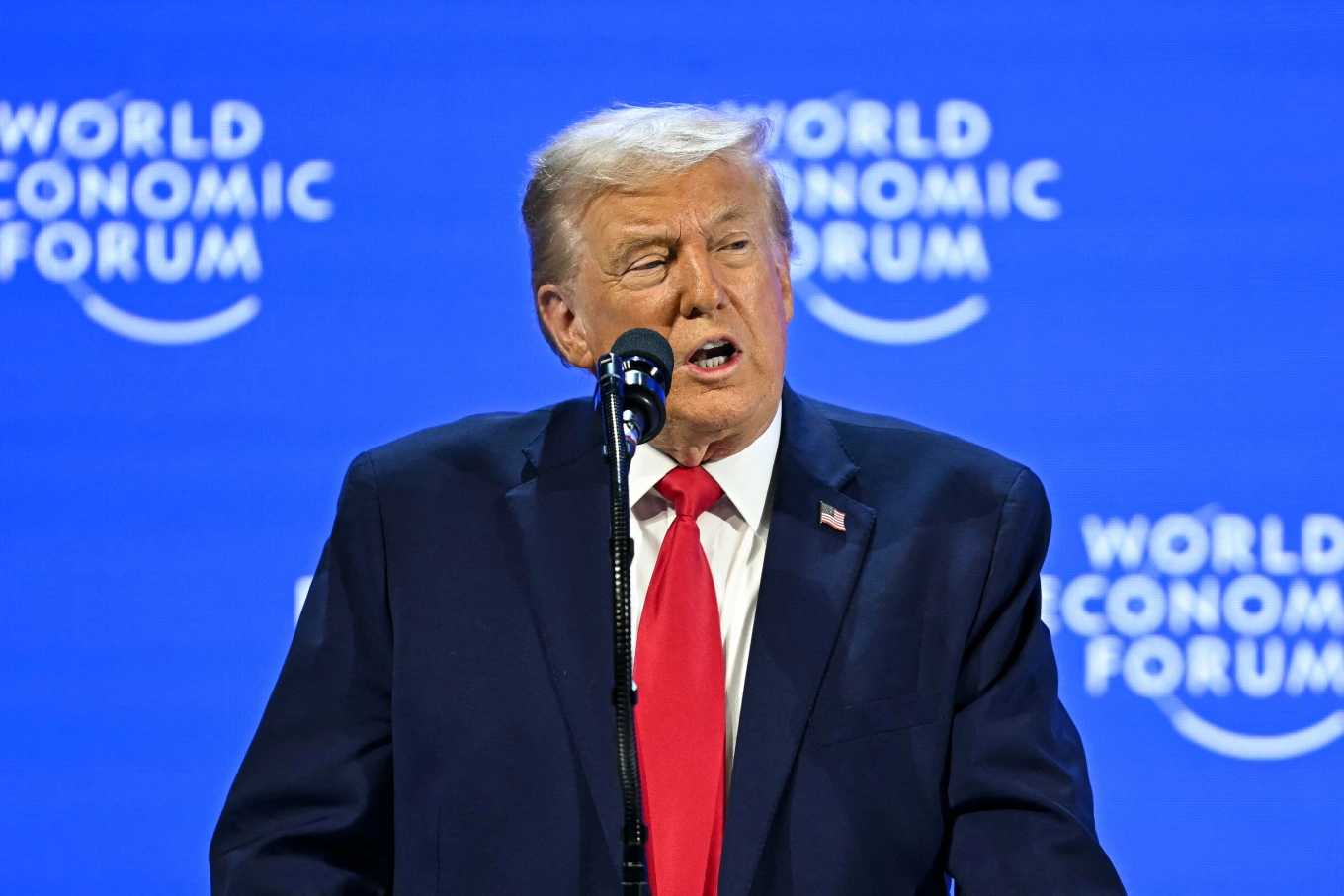
Remarks about seizing Greenland, confusion between Greenland and Iceland, and grievance-laden claims about World War II contributions left many in attendance visibly stunned. European officials privately described the speech as alarming, not because it was provocative, but because it reinforced doubts about American seriousness.
For many outside the United States, the speech was not merely controversial—it was clarifying.
A World Preparing for Life Without American Leadership
International reaction has been swift. Analysts across Europe and Asia increasingly speak openly about a future in which U.S. leadership is no longer guaranteed. The shift is not ideological but pragmatic.
If Washington no longer upholds the norms it once championed, others will seek alternative arrangements.
This does not mean the world is rejecting the United States outright. Rather, it is preparing for a diminished, less predictable America—one that may still be powerful, but no longer central.
That adjustment, paradoxically, weakens the United States more than any rival ever could.
Legacy and the Price of Disruption
Trump has long framed himself as a disruptor, a leader unafraid to challenge conventions. But history may judge disruption differently when it dismantles systems that took generations to build.
The American-led order was never perfect. It was often hypocritical, uneven, and unjust. But it provided stability, reduced great-power conflict, and enabled unprecedented global growth.
What is being lost now is not simply influence, but credibility—the hardest form of power to regain.
As one former official put it, “Empires fall when they stop believing in the institutions that sustain them.”
For the first time in modern history, the world is openly contemplating a future without American leadership at its core. And that, more than any single policy or speech, may define this moment as one of irreversible change.