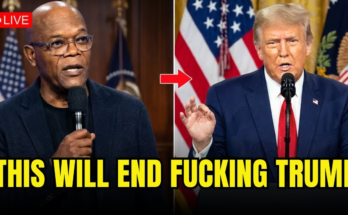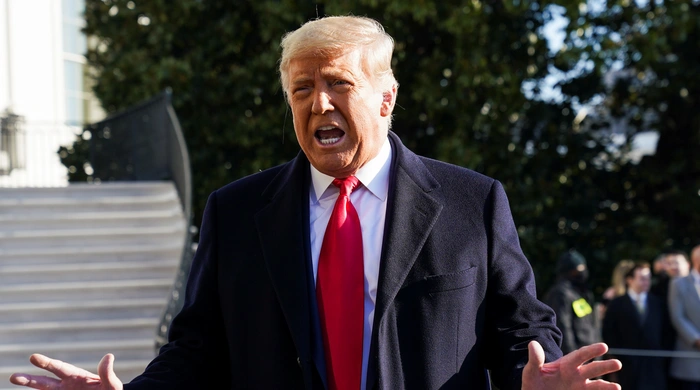
WASHINGTON — In recent weeks, a new genre of political video has surged across YouTube and other social platforms. Their titles are breathless and definitive: Trump Refuses to Resign as Congress Votes for Emergency Removal or Breaking: House Moves to Remove Trump Immediately. Millions of viewers have clicked. Many have shared them as if they were breaking news.
They are not.
What these videos present as imminent constitutional crisis — a president defying Congress, lawmakers rushing to remove him — has not occurred. There has been no resignation ultimatum issued by Congress. No emergency vote has been taken to remove President Trump from office. No extraordinary constitutional mechanism has been triggered.
Yet dismissing the videos as pure fantasy would miss the deeper truth they reflect: a widespread sense that the normal mechanisms of accountability are failing, and that the country is stuck between documented allegations of abuse and a political system unwilling to act on them.
The gap between what Americans see online and what Congress is actually doing has become one of the defining tensions of Trump’s presidency.
What Is Real — and What Is Not
The viral narratives collapse weeks, months, or even years of political conflict into a single dramatic moment. They suggest a Congress united in alarm and prepared to act decisively. In reality, Congress remains divided, cautious, and constrained by partisan loyalty.
There are, in fact, multiple impeachment resolutions currently on file in the House of Representatives. They come from individual Democratic lawmakers and outline allegations ranging from abuse of power and obstruction of Congress to violations of constitutional norms. These resolutions are public, formal documents — but they are also largely symbolic unless leadership chooses to advance them.
Calls for President Trump to resign are also real. Individual lawmakers, former officials, editorial boards, and activist groups have urged him to step down, arguing that his conduct has made him unfit for office. But these calls are fragmented. Congress as an institution has not demanded his resignation, and there is no coordinated effort to force one.
What does not exist is the dramatic sequence portrayed in viral videos: a unified Congress issuing an ultimatum, followed by an immediate vote to remove the president after he refuses to comply. That storyline belongs to political fiction.
The Machinery That Exists — and Why It Isn’t Moving
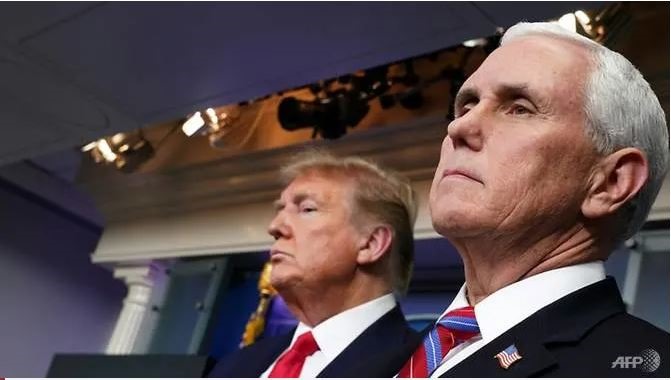
The Constitution provides two primary mechanisms for removing a president before the end of a term: impeachment and the 25th Amendment. Both are real. Both are intentionally difficult.
Impeachment begins in the House of Representatives, where a simple majority is required to approve articles of impeachment. If that threshold is met, the process moves to the Senate, which conducts a trial. Conviction — and removal — requires a two-thirds vote.
President Trump has already been impeached twice in his political career. Both times, the Senate acquitted him. The pattern was consistent: while Democrats voted nearly unanimously to convict, Republicans largely held the line, calculating that political survival required loyalty to the president rather than institutional accountability.
That calculation has not changed.
Republicans currently control the House. Even if Democrats regain control in future elections and pass new articles of impeachment, removal would still require a significant number of Republican senators to vote to convict — a scenario that remains highly unlikely absent a dramatic collapse in Trump’s political support.
The 25th Amendment presents an even higher barrier. It allows the vice president and a majority of the cabinet to declare the president unable to discharge the duties of office. If the president contests the declaration, Congress must then vote, by a two-thirds margin in both chambers, to uphold it.
This mechanism has never been used to permanently remove a president. It requires Trump’s closest political allies — the very people he appointed — to turn against him. Despite public speculation and opinion columns arguing for its use, there is no indication that the vice president or cabinet members are prepared to take such a step.
Why the Videos Keep Coming
If Congress is not acting, why do so many Americans believe it is?
The answer lies partly in frustration. For years, Trump has faced allegations that would likely have ended other presidencies: obstruction of investigations, pressure campaigns involving foreign governments, defiance of congressional oversight, and efforts to undermine democratic norms. Yet he remains in office, insulated by partisan loyalty and the high thresholds required for removal.
For many viewers, viral videos offer a form of emotional resolution that reality has not provided. They depict a system that finally works — where lawmakers act decisively, consequences follow swiftly, and accountability is unmistakable.
But that catharsis comes at a cost.
By presenting fictional outcomes as imminent reality, these videos risk creating complacency. If viewers believe Congress has already acted, or is on the verge of acting, they may disengage — assuming the system is correcting itself when it is not.
The Real Stakes for Democracy
The deeper concern is not whether Trump will be removed tomorrow. It is what it means for American democracy if a president can face extensive allegations of abuse and yet remain effectively immune from institutional consequences.
Impeachment was designed as a safeguard against executive overreach. If it becomes politically unusable — not because the conduct is acceptable, but because party loyalty outweighs constitutional duty — its deterrent power erodes.
That leaves elections as the primary check on presidential misconduct. Elections matter profoundly, but they are blunt instruments. They occur at fixed intervals and depend on voter engagement, information, and turnout. They do not address misconduct in real time.
The result is a system where accountability is delayed, indirect, and often incomplete.
What Would Actually Change the Equation
History suggests that presidents are removed not simply because evidence exists, but because political incentives shift. That shift usually requires overwhelming public opposition, sustained media scrutiny, and elite consensus that defending the president has become more costly than abandoning him.
Absent such a shift, the constitutional mechanisms remain dormant.
That reality is uncomfortable. It offers no dramatic resolution, no emergency vote, no immediate reckoning. Instead, it demands sustained civic engagement: pressure on representatives, scrutiny of institutional behavior, and participation in elections that shape the balance of power.
The Difference Between Fantasy and Responsibility
The popularity of fictional impeachment narratives reveals a hunger for accountability. But accountability in a democracy is rarely cinematic. It is slow, procedural, and often unsatisfying.
Understanding what is actually happening — and what is not — matters more than sharing a dramatic thumbnail. The Constitution provides tools, but it does not compel their use. That responsibility falls to elected officials and, ultimately, to voters.
The real story of Trump’s presidency is not one of imminent removal, but of a system strained by partisanship and tested by a leader willing to push its limits — and a Congress uncertain whether it has the will to respond.
That tension, unresolved and ongoing, is where the country truly stands.